
Bossier Parish Criminal Court Records
A criminal court record is the court-maintained case file, not just an arrest note. In Bossier Parish, the Clerk of Court's Criminal Department receives formal charges from the 26th Judicial District Attorney's Office. The Clerk states that felony charges under the Louisiana Code of Criminal Procedure are handled in that department when they occur in Bossier Parish. Misdemeanors are handled in municipal courts if the offense occurred within city limits, while other misdemeanor bills of information or indictments can be filed in district court.
The record may show the charging document, charge counts, motions, orders, subpoenas, bond-forfeiture notices, minute entries, plea activity, disposition, sentence, costs, and evidence references. The full case file belongs with the Clerk and the court. Arrest, booking, custody, and inmate profile details belong with the Sheriff's Office and are better matched to Bossier Parish inmate records when the question is jail status rather than court outcome.
The official source for the Clerk's criminal department description is the Bossier Clerk criminal department page.
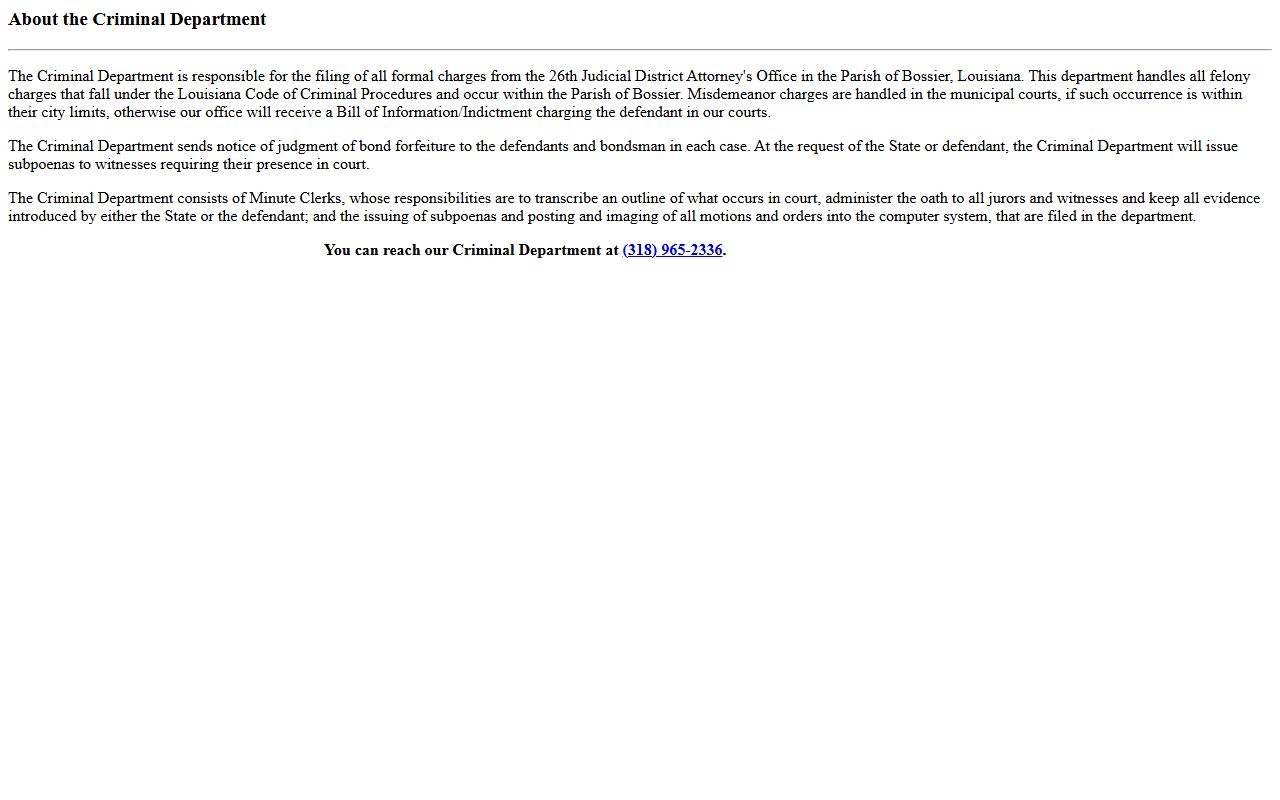
That source anchors the local distinction between felony district-court cases and municipal misdemeanor matters.
How to Search Bossier Parish Criminal Cases
The primary online route is Clerk Connect Criminal Inquiry. The static inspection of the public portal did not expose the exact search-field labels, so the safer search advice is practical: gather the defendant name, case number if known, approximate filing or arrest date, court level, and any charge information before using the portal or calling the Clerk. For a docket date rather than a full case file, use Court Event Inquiry or the DA docket page.
- Confirm that the matter is a district-court criminal case rather than a Bossier City Court municipal case.
- Use Criminal Inquiry for felony criminal case files and formal district-court charges.
- Check Court Event Inquiry or the DA docket page for hearing dates and scheduled events.
- Read the docket entries for charges, arraignment, motions, plea, disposition, sentence, and bond-forfeiture activity.
- Request certified copies from the Clerk when a legal filing, licensing matter, expungement, or court use requires certification.
The official image source for the Clerk's routed criminal department page is the Bossier Clerk criminal route.
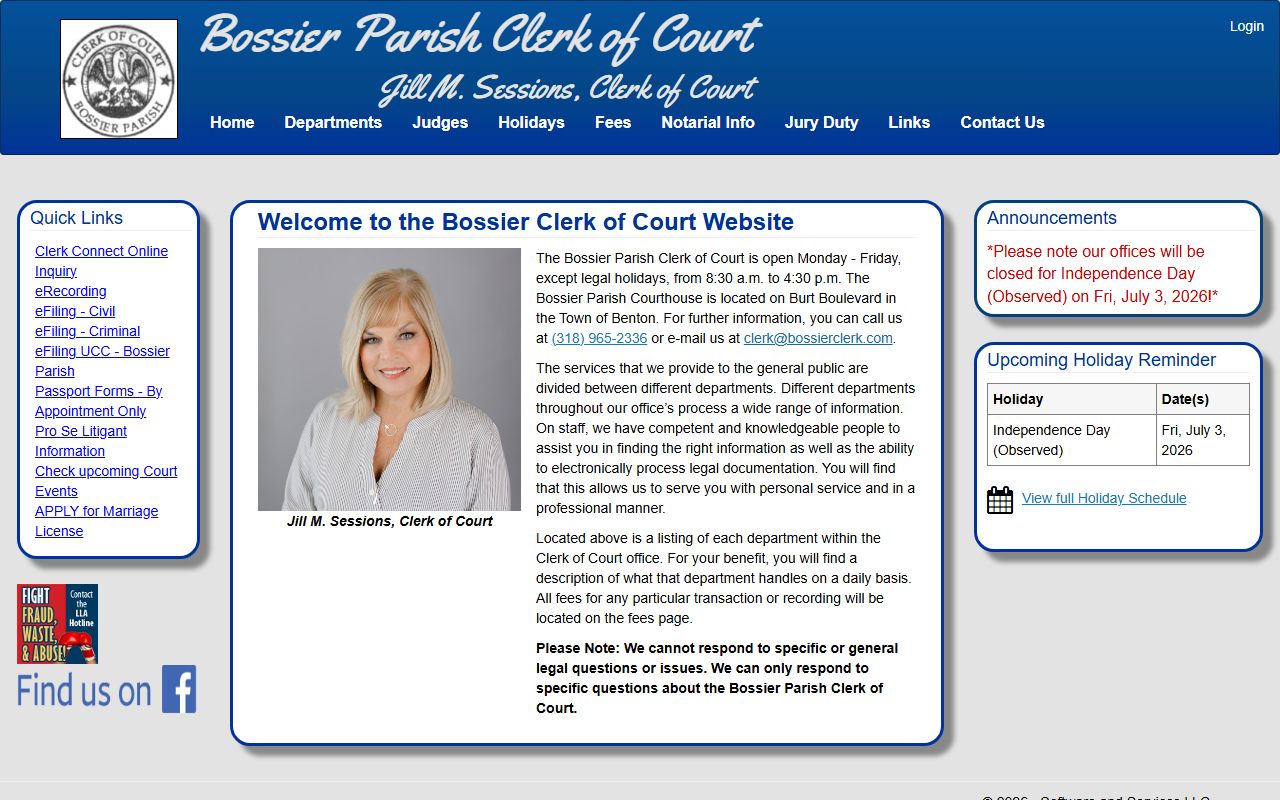
The routed page reflects the same criminal department function but may depend on the Clerk site's current JavaScript route.
Criminal Case Stages
A Bossier Parish criminal court record grows as the case moves. Formal charges enter the record through a bill of information or indictment. Arraignment follows when the defendant is called to answer the charges. Pretrial activity may include motions, subpoenas, discovery-related orders, bond issues, continuances, and hearings. A plea or trial then leads to disposition. If the defendant is convicted or pleads guilty, sentencing entries, probation terms, fines, costs, and related orders become part of the court file.
Case flow: Charges Filed › Arraignment › Pretrial / Motions › Plea or Trial › Disposition › Sentencing
| Stage | What Happens |
|---|---|
| Charges filed | The DA files a bill of information or indictment into the court record for district-court prosecution. |
| Arraignment | The defendant is called before court and a plea may be entered or scheduled. |
| Pretrial / motions | The record may show motions, orders, subpoenas, continuances, bond actions, and hearing settings. |
| Plea or trial | The court records whether the case resolves by plea, verdict, acquittal, dismissal, or other disposition. |
| Sentencing | The file may show sentence, probation, fines, costs, credit, and post-judgment orders. |
Bossier Parish Criminal Record Fields
Criminal records use terms that should be read with care. A charge is an accusation. A plea is the defendant's formal response. A disposition is the result of a charge or case. A sentence is the penalty after conviction or guilty plea. A minute entry is the clerk's summary of what happened in court. A bond forfeiture can appear when bond conditions are not met. These details may appear in the docket, the minute entries, or the underlying documents requested from the Clerk.
| Field | What It Shows |
|---|---|
| Case number | The court identifier for the criminal case. The exact public portal format was not exposed in static inspection. |
| Defendant | The person charged in the criminal case. |
| Charging document | The bill of information or indictment filed by the prosecutor or grand jury route. |
| Charge list | The offense counts, statutes or codes if shown, and any amended or dismissed charge history. |
| Plea and disposition | The plea entered and the outcome, such as guilty, not guilty, dismissed, acquitted, or other result. |
| Sentence and costs | The punishment, probation, fine, cost, or other financial obligation recorded after conviction or plea. |
The Clerk's official criminal eFiling source is Bossier Parish criminal eFiling.
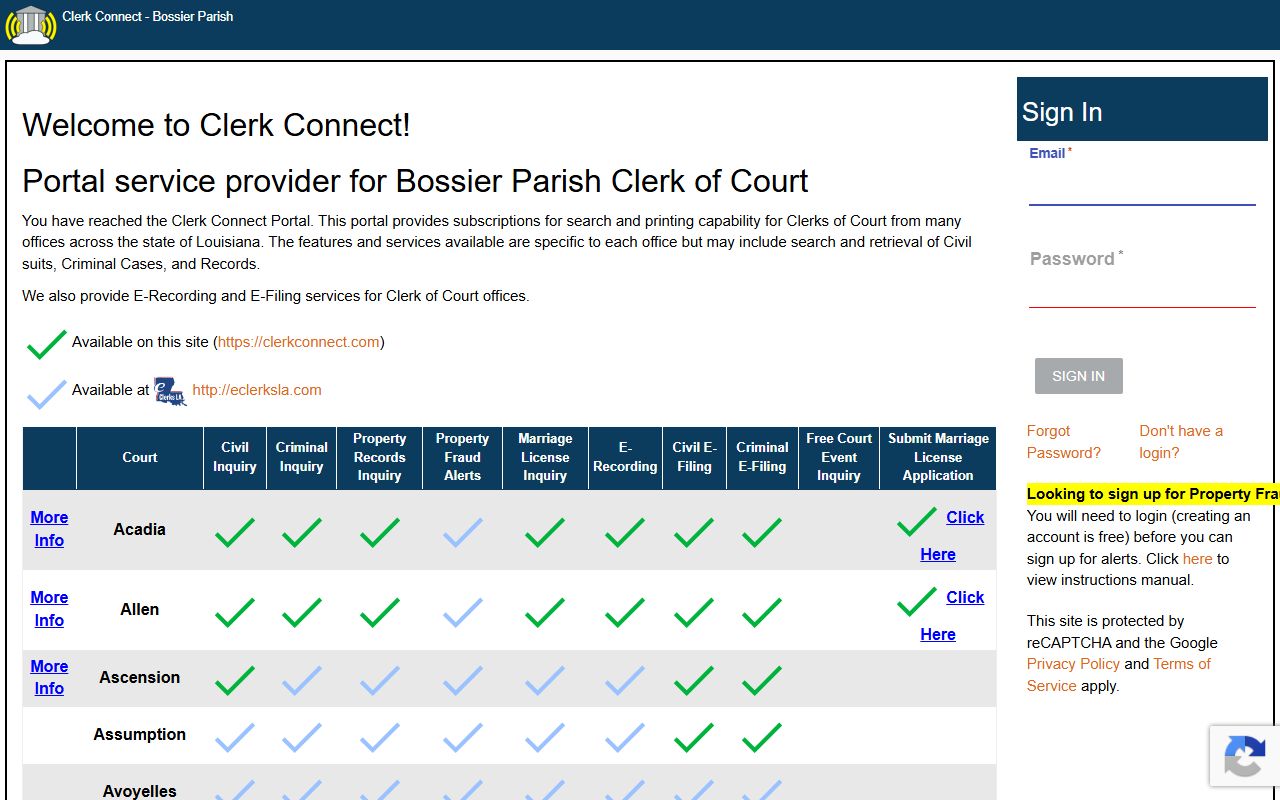
Criminal eFiling is a filing channel, while public record lookup and certified copies still depend on the Clerk's access rules.
Charges vs. Convictions
A Bossier Parish criminal court record can show accusations that did not become convictions. Charges may be amended, reduced, dismissed, or resolved through a plea to another count. A conviction occurs only after a guilty plea, verdict, or other court result that legally establishes guilt. The difference matters for employment, licensing, expungement, and personal review, but FCRA-regulated background decisions require lawful consumer-reporting processes.
| Point | Charge | Conviction |
|---|---|---|
| Meaning | An accusation filed or pursued in court. | A legal outcome after plea or verdict. |
| Record stage | Early or pending case stage. | Disposition and sentence stage. |
| Can change | May be amended, reduced, dropped, or dismissed. | May later be appealed, set aside, sealed, or expunged if law allows. |
| How to verify | Read the charge list and docket history. | Read the disposition, minutes, judgment, and sentence. |
Sealed and Expunged Criminal Records
Sealing and expungement are not the same as erasing history from every government system. Louisiana State Police describes expungement as removal from public access, not destruction, when a court order requires criminal arrest and conviction records to be modified. A person with a Bossier Parish case generally starts with the court where the case occurred, uses the proper expungement forms, serves required agencies, and waits for court action. Eligibility depends on the charge, outcome, time period, prior record, and other facts.
| Point | Sealed | Expunged |
|---|---|---|
| Public visibility | Removed or restricted from ordinary public access by order or law. | Removed from public access under an expungement order, subject to legal exceptions. |
| Record status | The record still exists but is restricted. | The record is not destroyed under Louisiana expungement rules. |
| Who may still access | Access depends on the order and statute. | Law-enforcement, court, and agency access may remain where law allows. |
| Local route | Start with the court and Clerk for the case file. | Start with the court that handled the case and the Louisiana State Police process when required. |
The statewide expungement source is Louisiana State Police expungements.
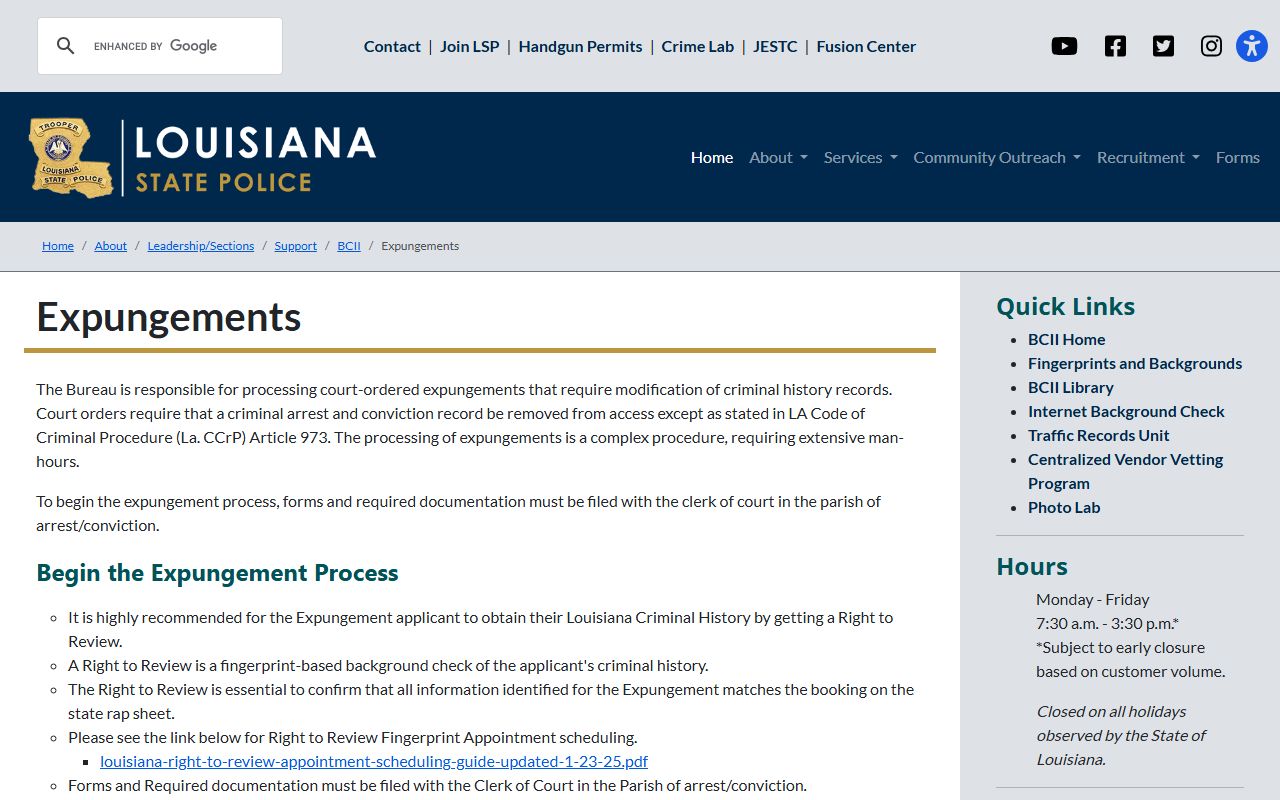
That source is the safer statewide reference for what a court-ordered expungement does to criminal-history access.
Public Access to Bossier Parish Criminal Records
Louisiana public-records law and court access rules allow many criminal court records to be inspected, but the limits are real. La. R.S. 44:1 defines public records. Title 44 includes public-records limits important to criminal and law-enforcement material. A court case file may be open while a Sheriff's investigative file remains privileged, especially before adjudication. For the full criminal case record, use the Clerk. For arrest reports, booking data, or incident reports, use the Sheriff's Records Division.
The Louisiana public-records source for criminal-record limits is Louisiana public records Title 44.
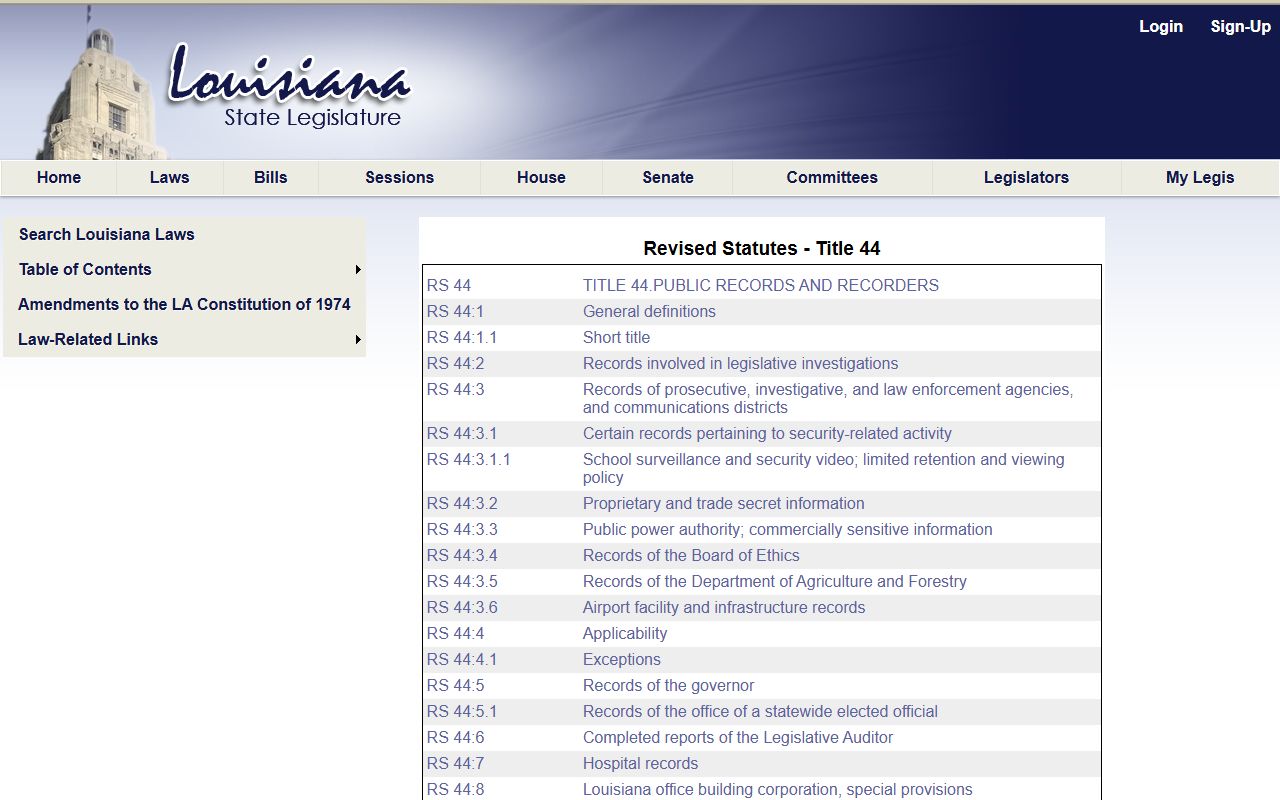
Title 44 is most useful when a request crosses from a court file into sheriff, investigative, or pending criminal material.
Restricted Bossier Parish Criminal Records
Juvenile records, sealed records, expunged records, adoption-related records, mental-health materials, protected victim identifiers, undercover identities, confidential sources, investigative methods, security procedures, and training information are not treated like ordinary public criminal case records. Louisiana juvenile confidentiality rules are especially important. The public should not expect ordinary Clerk portal access to juvenile delinquency, status offense, dependency, or adoption records.
The Louisiana juvenile-law source for confidentiality reference is the Louisiana Children's Code table.
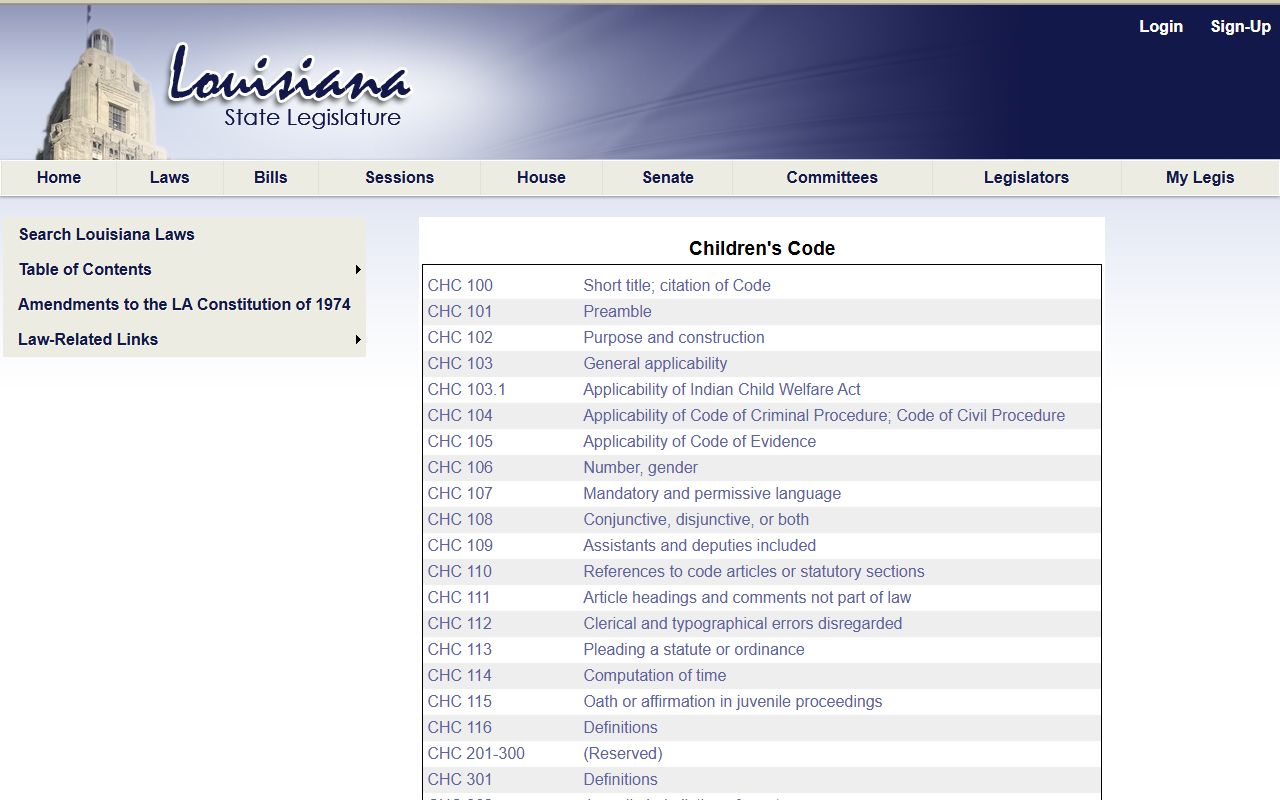
Juvenile confidentiality is one reason a criminal search may produce no ordinary public result even when a court event exists.
Important: Criminal court record lookups are not FCRA consumer reports and should not be used for regulated screening decisions.